It’s June 14, and while the nation gets ready to celebrate its big fat birthday, there’s a lot going on in the news to dull the fireworks: protracted conflict in the Middle East, ethics scandals in Washington DC, anxiety over the price of gasoline, concern about the drinking habits of several high-ranking US officials, and instability in Cuba.
Oh wait, it’s June 14, 1976.
And my 50-year-old copy of Newsweek is here to remind all of us that the more things change, the more they stay the same.
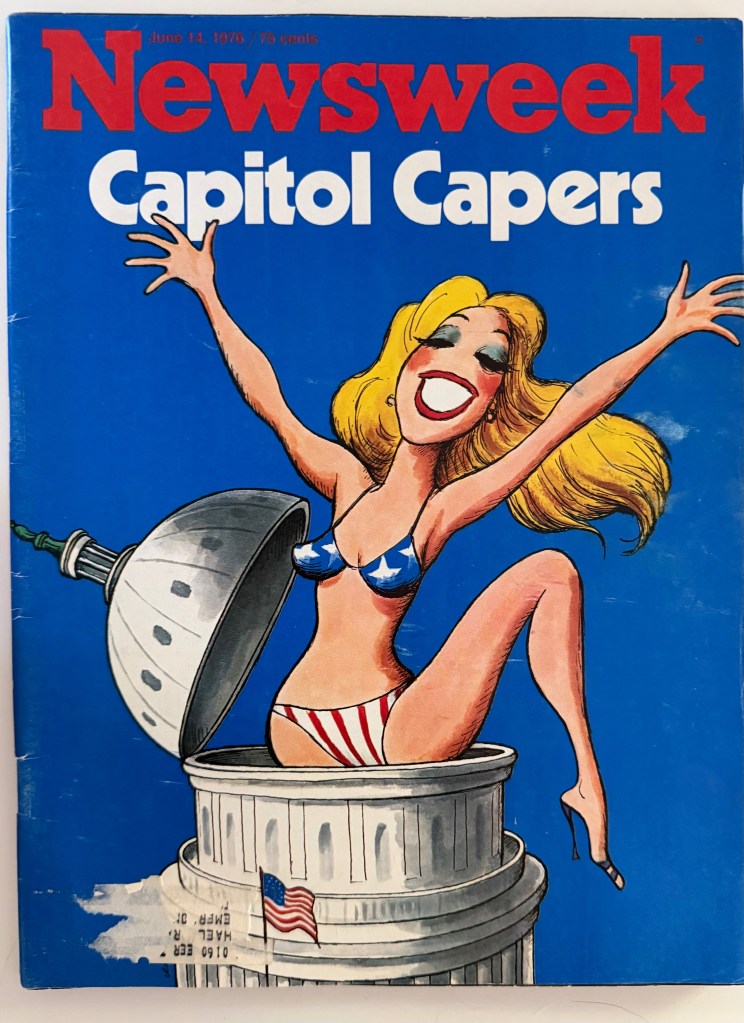
Long before smart phones let us carry a 24×7 global newsroom in our back pocket, magazines like Newsweek played a significant role in how Americans got their news; as many as 4 million people read Time, Newsweek and US News & World Report every week. For just 75 cents, readers got nearly 100 pages of news, opinion, arts coverage, and—in this particular issue—22 full-page ads for cigarettes and hard liquor.

Is it reassuring or depressing that not much has changed in 50 years?
This Newsweek has the same op-ed columns you’d find today, like the one questioning Israel’s behavior toward its neighbors. The same review of the big summer wannabe sci-fi blockbuster (David Bowie’s “The Man Who Fell to Earth,” not Spielberg’s latest alien thriller.) The same article pondering which way California will vote in the upcoming elections.
There’s even an article about how a regional war is choking the flow of oil in the Mideast. But the article isn’t about the Strait of Hormuz. It’s about the Suez Canal.
Tomato, tomahto.
Apocalypse when?
These days, it’s easy to think the end of the world is imminent: Runaway AI. NATO on the brink. Global warming. But end-of-the-worldism is nothing new. In 1976, Pat Robertson, the well-known Southern Baptist minister and oft-addled media figure, predicted that the world would end in 1982. He was almost correct: in 1982, the TV networks cancelled “Taxi,” “WKRP in Cincinnati,” “Lou Grant,” and “Barney Miller.” Those decisions did real damage to the world.
But I digress.
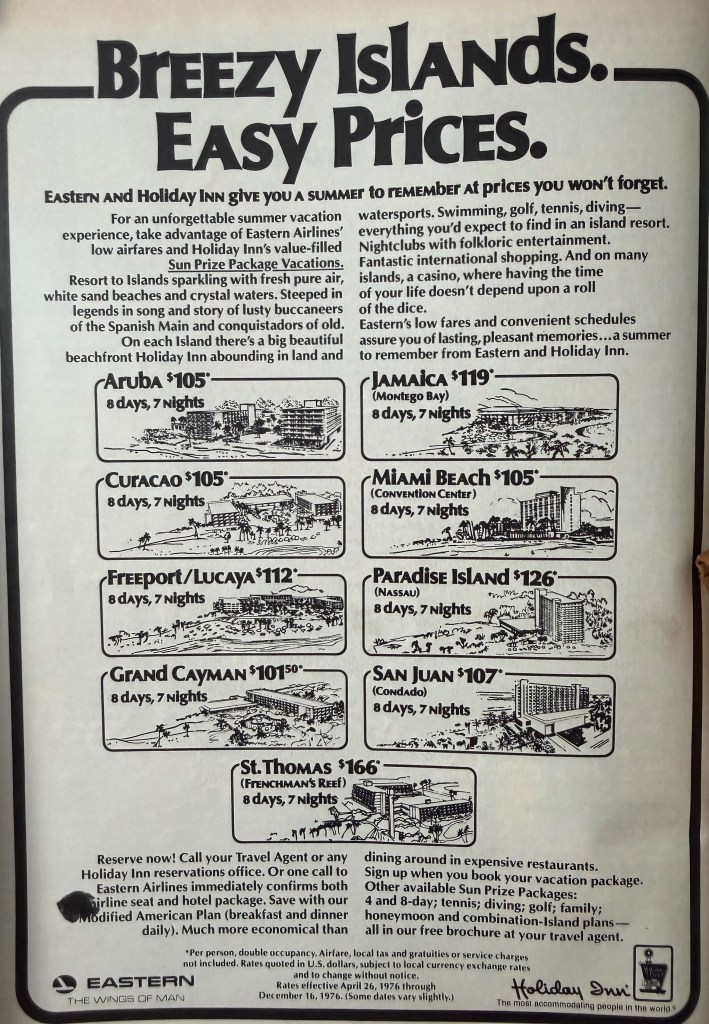
Maybe things weren’t all that bad back in ’76, after all. According to my half-century-old Newsweek, an eight-day, seven-night stay in Aruba at the Holiday Inn (Eastern Airlines airfare not included) went for $105 total. That’s just $15 a night—about $75.76 in today’s dollars. Try finding that in Aruba now.
I’m too hungover from the 22 pages of ads for cigarettes and booze to do the “what was the median income in 1976 versus 2026” thing. Still, you get the idea.
The future is looking good
Newsweek essentially shut down in 2012. Internet killed the magazine star(s). But thankfully, the world continues to spin – for now. And while very little has changed in 50 years, one thing has gotten just a little bit better: men’s fashion.
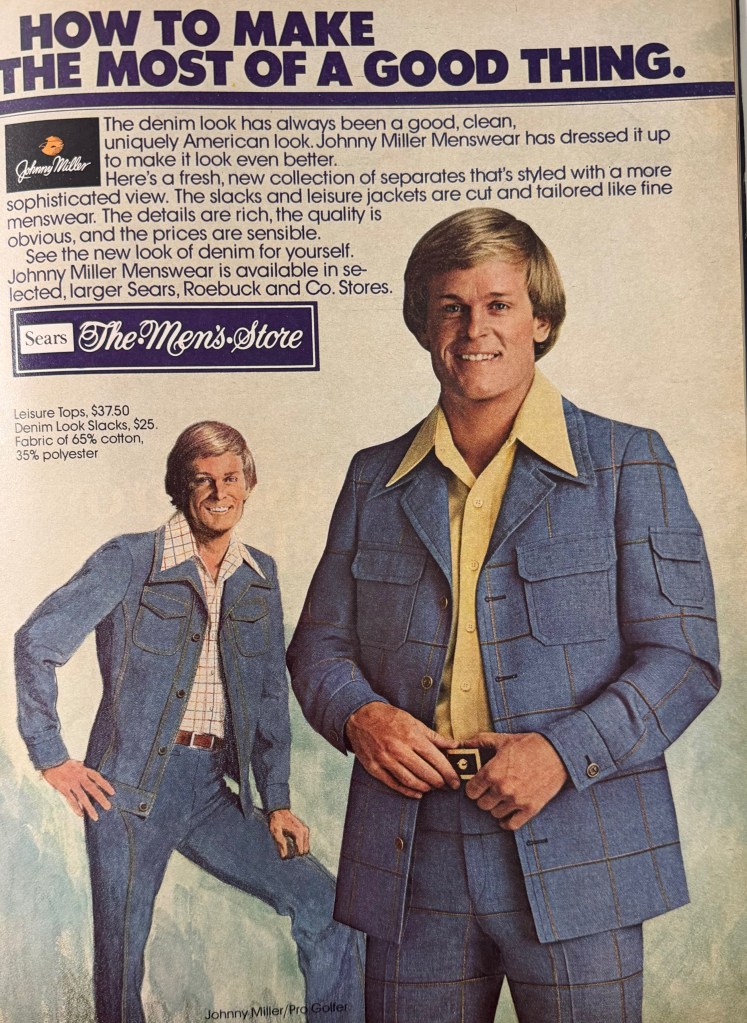
Anyway, today is June 14, 2026, not 1976. And we’re much cooler now.
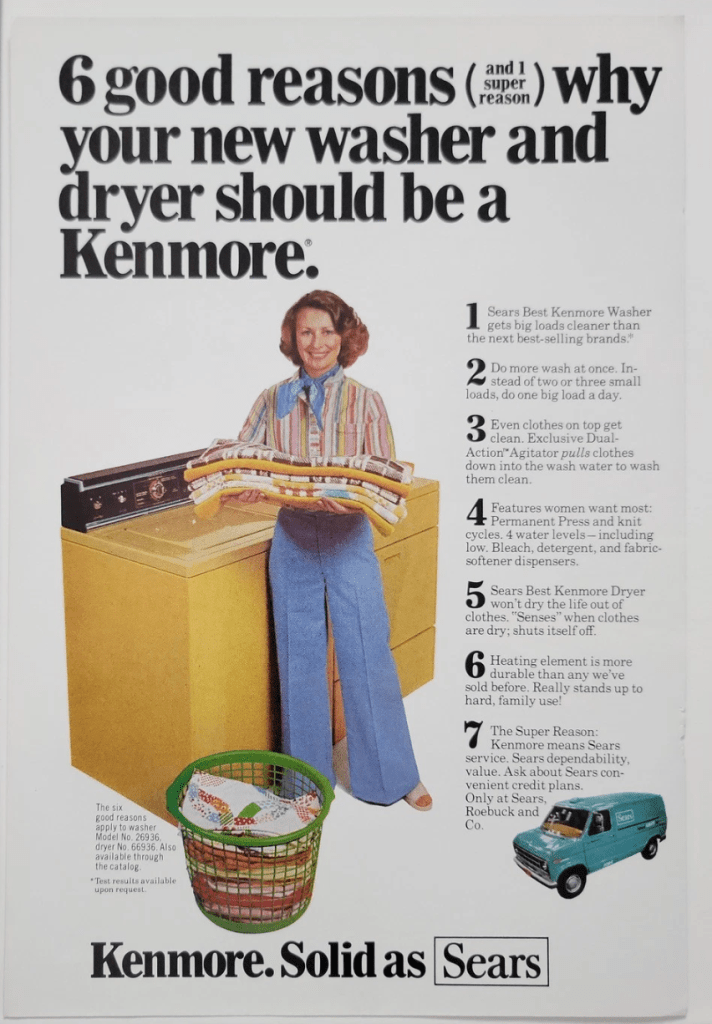
So excuse me while I light up a Tareyton 100 and get my dad-bod cargo shorts out of the washing machine.


Leave a Reply