Gen X doesn’t just listen to old songs for pleasure. We use them as emotional time machines.
One minute you’re washing dishes, driving to the grocery store, or scrolling through your phone, and the next minute you’re 14 again, 19 again, 27 again. A song comes on, and suddenly you are not just hearing it — you are inside it. The room, the car, the people, the smell of your dad’s cigarette, the clothes, the haircut, the heartbreak, the hope. All of it comes rushing back.
That’s one of the great gifts of music, especially for those of us who came of age in the 1970s and 1980s. Songs don’t just remind us of the past. Music can make the past feel emotionally alive again — not just remembered, but reexperienced.
But here’s the tricky part: there’s a fine line between reflection and rumination.
Reflection says, “That song reminds me who I was.”
Rumination says, “I need to keep playing this because I don’t want to be who I am now.”
That difference matters.
The power of the replay
For Gen X, nostalgia is rarely just nostalgia. It’s identity, memory, grief, survival, and joy all tangled together. The music we loved back then wasn’t background noise. It was the soundtrack to becoming ourselves.
We remember the first songs that made us feel less alone. The first bands that made us feel cool. The first mixtapes we made for somebody we liked, or maybe loved, or maybe only hoped might notice us. We remember what it felt like to hear a song on the radio and feel, for a few minutes, like the whole world had cracked open and revealed a secret message meant just for us.
That’s not trivial. That’s formative.
So of course we go back. Of course we put on the old songs. Of course we say, “Man, they just don’t make music like that anymore.” Sometimes that’s just a harmless declaration of taste. Sometimes it’s a little prayer. Sometimes it’s a way of saying we miss not only the music, but the people we were when the music first mattered.
And that’s where reflection begins.
Reflection is memory with perspective
Reflection is what happens when we return to the past with a little distance and a little grace.
It sounds like this:
- I remember that song, and I remember who I was when I loved it.
- That period of my life was messy, but it shaped me.
- I can look back without needing to live there again.
Reflection lets us appreciate the past without being swallowed by it. It gives us perspective. It allows us to say, yes, that moment mattered, and no, I don’t need to stay in that moment forever.
That’s the healthier side of nostalgia. It can be tender, funny, bittersweet, even healing. It can remind us that we have a history. It can help us understand our younger selves with more compassion than we had at the time.
For many of us, that’s what music does best. It doesn’t just bring back memory. It gives memory shape.
Rumination is memory without release
Rumination is different.
Rumination is when the music stops being a window and starts becoming an escape room.
It sounds like this:
- If I keep listening to this, maybe I can stay there a little longer.
- I don’t really want to feel the present right now.
- The past feels safer, cleaner, and more familiar than whatever is happening today.
That’s where nostalgia can turn from comfort into avoidance.
There’s nothing wrong with revisiting the past. The problem comes when revisiting becomes looping. When the same songs keep pulling us back not because they nourish us, but because they give us a place to hide. When the music isn’t opening memory anymore, but trapping us inside it.
And let’s be honest: that temptation gets stronger as we get older.
Aging has a way of making the past feel polished. The rough edges soften. The embarrassing moments become funny. The heartbreaks become stories. The dead become more vivid in memory than in life. The songs become more than songs. They become artifacts from a life we can’t get back.
That can be beautiful. It can also be dangerous.
Because sometimes what we’re really missing isn’t the era. It’s the feeling of possibility we had in it.
Why Gen X feels this so deeply
I think this tension hits Gen X especially hard because music was so central to the way we understood ourselves. For a lot of us, the songs of our teenage years and early adulthood weren’t just entertainment. They were maps. They told us where we belonged, what we rejected, what we feared, what we wanted, and who we thought we might become.
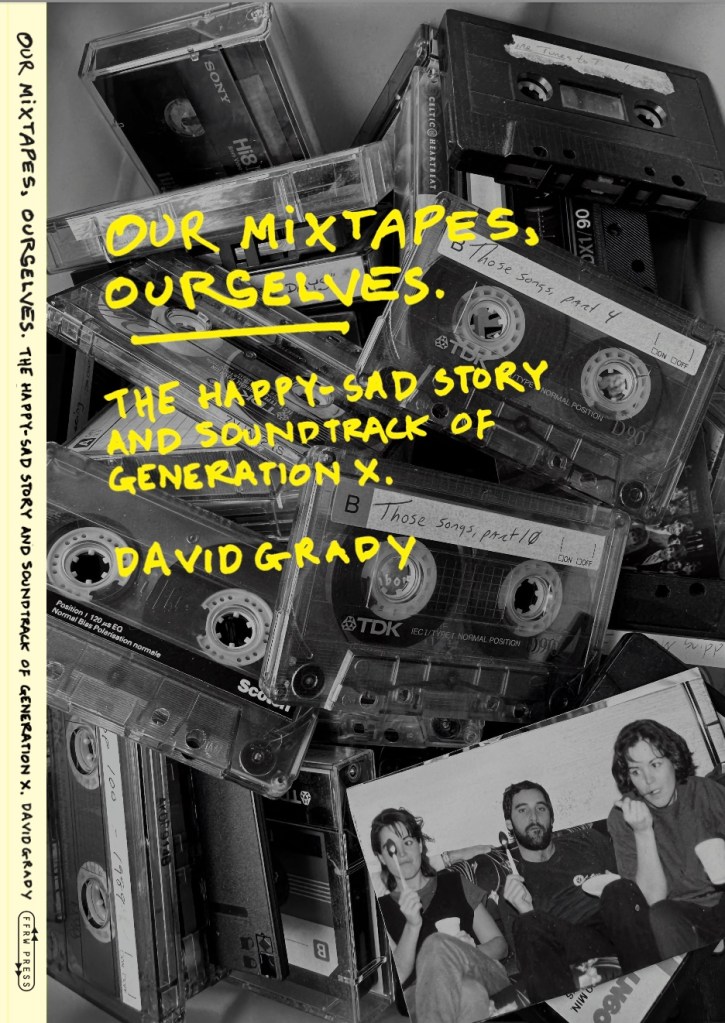
We found ourselves in the music. We built identities out of it. We made mixtapes that were really emotional autobiographies in disguise.
And now, decades later, those same songs still have the power to reach across time and grab us by the collar.
That’s why nostalgia can feel so comforting for our generation. But it’s also why it can become a trap. If the music is always taking us backward, and never helping us make sense of the life we’re actually living now, then we’ve crossed the line from reflection into rumination.
The question isn’t whether we should keep listening to the old songs.
The question is what we’re using them for.
The right question to ask
Maybe the real test is simple:
- Does this song help me remember, or does it help me avoid?
- Does it open something in me, or does it freeze me in place?
- Does it make me more curious about my life, or less willing to engage with it?
I don’t think nostalgia is the enemy. Not at all. I think nostalgia can be a gift. It can reconnect us to joy, tenderness, grief, and continuity. It can remind us that we have survived things. It can help us see our younger selves as real people, not just blurry versions of who we are now.
But like any powerful feeling, nostalgia needs boundaries.
A song can bring you back. That’s the miracle.
Just don’t let it become the only place you want to go.
The mixtape lesson
Maybe that’s why I’ve always loved the mixtape as a metaphor.
A good mixtape is movement. It has rhythm, contrast, memory, surprise. It doesn’t stay in one emotional register too long. It knows when to linger and when to move on. It understands that sadness and joy can sit next to each other without canceling each other out.
That seems like a pretty good model for nostalgia, too.
Listen to the songs. Let them take you back. Let them make you smile, ache, laugh, and remember. Let them show you where you came from.
But then come back.
Because the point of reflection is not to live in the past. The point is to understand it well enough to keep going.
 David Grady: Words and Pictures
Leave a comment