By David Grady
So you’ve been tasked with organizing a team-building event as part of a very costly three-day all-hands corporate offsite meeting? Lucky you!
Should you go with an open bar at a hip, swanky nightclub — offering ample opportunity for cheese, crackers, and regrettable behavior?
Or maybe you should rent out an escape room, where far-flung colleagues meeting in person for the first time can demonstrate just how well they handle – or can’t handle – stressful situations?
Perhaps you should put together a team-building event that’s “outside the box,” like a bowling alley party, where members of every little established office clique will quickly coalesce in their own private, dimly-lit lanes for the entire night?
Or a citywide bar crawl/scavenger hunt that ends with the team assembling a 10-speed bicycle without the directions – blindfolded, maybe?
Or maybe not.
When planning your next team-building event, don’t start with the venue. And don’t start with the menu.
Instead, experts advise you start with the outcomes the leaders who are funding this potential boondoggle might have in mind. Like, actual desired outcomes with a measurable ROI. And if the only direction you received (along with the corporate credit card) was to “do something different so the team can have some fun,” then seize this opportunity to (in the parlance of business-speak) show that at the end of the day you are a strategic thinker and a value-added corporate rock star who isn’t afraid to lean in and enable some game-changing team synergy.
In human words, that means asking one simple question: Why are we spending precious time and money doing a team-building exercise on day two of our big three-day offsite?
It’s time to “stop meeting like this“
I recently talked about offsites and team-building events with Shani Harmon, CEO of Stop Meeting Like This, a Chicago-based consultancy that advises companies large and small on how to optimize collaboration. Stop Meeting Like This works to enhance the health and effectiveness of teams, its website says, and “to help companies catalyze new ways of working that produce better business outcomes and enhance the human experience of work.” An impactful team-building event, Harmon says, must be part of a broader, more thoughtful collaboration strategy — especially when it’s scheduled during a multi-day offsite.
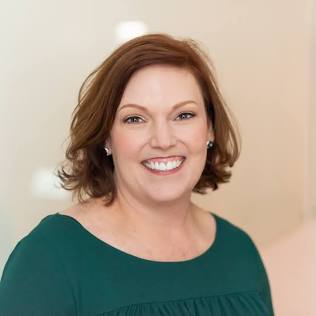
CEO, Stop Meeting Like This
“I don’t think there should be such a thing as a team-building event that’s just an isolated thing,” Harmon says. “It’s a wasted opportunity if it’s not done strategically. It’s got to be in service of a higher purpose. If it’s just about getting to ‘like each other more’ or ‘having had fun together,’ well, that’s fine. But if I’m the CEO of a company, would I want to sign-off on that? Why would I sign off on that if it’s just ‘a nice to have,’ especially in this climate where you know every dollar counts so much? It has to be tied to an objective that’s measurable.”
Objectives, Harmon says, like…ensuring that everyone understands the team’s goals and mission, why those goals and missions are what they are, and how the team (as individuals and as a group) support the attainment of those goals. A “fun” yet carefully designed team-building exercise can recontextualize workplace goals or skills, as in “the juggling lesson we had at that ‘circus arts’ thing we did last month has really helped me think about how important prioritization is when multi-tasking.”
Building trust between managers and junior employees or fostering familiarity and collaboration amongst a geographically decentralized team are other perfectly good team-building objectives – as long as the event is deliberately engineered to support the attainment of those objectives.
Stop Meeting Like This features a roster of consultants that include psychologists, cognitive researchers, and certified leadership coaches, which elevates the value it brings to offsite planning far beyond “venues and menus.” While every team-building event that Harmon and her team support is different, clients are consistently given one foundational piece of advice: be careful not to inadvertently recreate the existing (and possibly dysfunctional) office dynamic during your next team-building event. The playing field, she says, must be level.
“If you just go to a cooking class and there’s no structure to it, people naturally cluster in the pods they already have relationships with, and there are all the usual hierarchical dynamics and gender dynamics,” says Harmon, who’s quick to note that she’s not specifically anti-cooking class. “You still have the extroverts and the introverts, and there’s not enough deliberate structure to support actual, organic teaming,” she adds.
Clearly, a different approach to team-building events is needed to help your department or your entire company – forgive the business buzzword – “harmonize.”
Literally helping the team “sing from the same song sheet”
Check the online job boards and you’re sure to come across plenty of help wanted ads looking for “rock stars.” A recent search on Indeed.com yielded 57 Manhattan-based job openings — from dental assistant to coffee shop barista to advertising executive – for which being a “rock star” is a key qualification. Depending on which day your read Forbes.com, hiring “rock star” is either a very good or a very bad HR strategy.

On a very cold Thursday night in Boston, just a few weeks into this new year, 18 or so co-workers who’d flown in from all over the country for a three-day offsite meeting showed up at 7 pm at a spiffy little piano- and guitar-filled studio called “Musicians Playground,” unaware that they were about to become legit rock stars themselves.
Employed by a well-known company that shall remain unnamed here, many of these managers and staffers were meeting in person for the first time after years of only virtual collaboration. At Musicians Playground, in just over two hours, this collection of colleagues would learn to sing in harmony and to play drum beats and piano chords and guitar riffs in a manner that would earn a solid “meets expectations” on an annual performance review. They’d even rewrite the lyrics to their song, incorporating their distinct workplace lingo into a familiar tune. (On this night, the client chose Bon Jovi’s “Livin’ on a Prayer.”)
Alyssa O’Toole is Founder and Director of Musicians Playground, which describes itself as sort of a musical health club for adult music hobbyists — where the music contributes to overall wellness. She started giving private piano lessons in 2013 and in recent years has grown her business to a community of hundreds of students who partner, one on one and in groups, with highly-qualified vocal coaches and teachers of all sorts of instruments.

Musicians Playground
The studio, a short walk from the Boston Common, does in fact look and feel a bit like a gym, except there are rows and rows of pianos and guitars where the free weights and treadmills ought to be. (It smells better, too.)
Since 2019, O’Toole and her team have steadily seen growing interest in their team-building exercises, hosting dozens of corporate events. The program Musicians Playground has developed, O’Toole says, is carefully designed to deliver a lasting and meaningful team-strengthening experience. Teams are typically split into three randomly-assembled groups – would-be singers, would-be guitarists and would-be pianists – who gather in groups in their own little soundproof studios to learn their parts of the chosen song. After an hour or so of coaching, the three sub-groups come together and perform their song as one big band.
“The mixture of the small and big challenges that we very intentionally curate gets people collaborating in a very different way,” O’Toole says. “But also, with the randomness of selection and who you end up in a group with, and ultimately what instrument you’re placed with, it really levels the playing field.”
Having multiple singers, and not just putting the spotlight on one wannabe “rock star,” creates a safe space for co-workers to step out of their traditional hierarchical comfort zones. O’Toole recounts an event that Musicians Playground recently organized for a software company: “The C-level executive allowed themselves to get vulnerable in front of the rest of the group, and the most junior level assistant from the front desk of course just happened to be a closet amazing musician. And all of a sudden it’s their moment to shine bright. Then you saw the C-level person taking cues and direction from the front desk assistant! We always get feedback like ‘this was one of the most fun and like transformative experiences ever.’“
On the night I sat in at Musicians Playground to witness the birth of this newly-formed corporate rock band, the employees seemed to be having a synergistic blast — at last literally singing from the same sheet music. And when they rewrote the lyrics to include references to specific revenue targets, they happily realized that they’d transformed a complex KPI into a memorable musical earworm.
“One, two three, four!” (Measuring success.)
I asked Shani Harmon from Stop Meeting Like This for advice on measuring the success of an offsite meeting or team-building exercise, since the CEO is always looking at ROI.
Before you ever start reserving hotel room blocks for an offsite team-building event, she says, “figure out what is the state of the team is today.”
“You can do an anonymous survey…it could be asking if they agree with statements like ‘I have high levels of trust with the other members of this team.’ Or ‘I am clear on what our mission is or what our purpose is as a group.’ Or ‘I enjoy collaborating with the other people on my team.’”
A pre-event survey, Harmon says, can help answer the big question: Do we have actual problems that we need to solve? “Because that will steer the nature of the conversations that you need to have at the event, and the kind of experience you want to create.”
So, lucky you. Plan your next offsite team-building right, and everyone on the team will realize they’re all potential rock stars — and more importantly, they’re all members of a larger ensemble of harmonious, in-tune players.

 David Grady: Words and Pictures
Leave a comment